CH3OHhhhhhhh

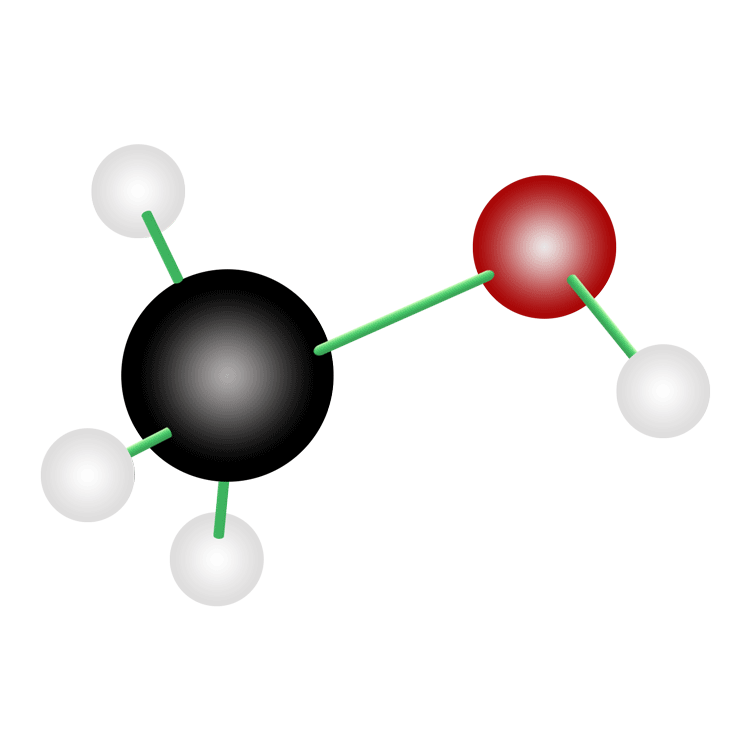
Water Methanol Diagram

Water Methanol Injection and VAG Vehicles

Kids, it’s time to talk about meth. Specifically water methanol injection. Why we love it for VAG vehicles, the gains, the power, the drawbacks. We’ll drop a little chemistry and physics knowledge along the way, so buckle up buttercups.

Why Add Water Methanol Injection?

First and foremost, more power; WMI cools your air charge considerably and raises the effective octane of your fuel which means you can run more aggressive timing and boost. Systems are reasonably priced compared to other high performance mods, it’s typically inexpensive to run and can give you the advantage of race gas without the cost.

Beyond the performance aspects, WMI injection also lowers engine temps, its cooling effect is great for warmer climates and on the track, it can actually help prevent engine overheat and give the cooling system a helping hand.

On VAG 2.0T direct injection motors, intake valves require periodic carbon cleaning due to the lack of fuel which would typically flow over the intake valves in a port injection motor. WMI systems have the added benefit on these cars of providing some fuel in the form of methanol which is a very effective solvent and helps reduce or even eliminate carbon deposits on the valves.

WMI may also be run in conjunction with E85 or race gas for an added cooling benefit; this is particularly effective when the intercooling system is nearing its limits and chemical intercooling may be useful. Alternately, if E85 or race gas isn’t readily available in your area, WMI likely is.
So How Does It Work?

There are two main events: chemical intercooling and octane boost.

Before the mixture even enters the combustion chamber chemical intercooling begins. Both water and methanol have a high latent heat of vaporization, meaning that when they change phases from a liquid to a vapor they absorb a substantial amount of energy from the surrounding environment. Nozzles in WMI systems are designed to produce a specific droplet size which allows rapid vaporization of the water/methanol mixture.  That vaporization cools the surrounding environment.

The mixture is commonly injected into the charge piping after the intercooler and the result is a substantial reduction in intake air temperature.  A cooler charge is slightly denser but more importantly it is much less sensitive to knock. A 20 degree C reduction in intake temps can easily be realized in a high boost application and can instantly result in several degrees of ignition advance and improved output. WMI contributes to cooling but it also has an exceptionally high octane rating.

As the mixture enters the cylinders a number of potential knock issues are addressed and one way to think of that is effective octane boost.  Some of these are minor, like the potential to reduce carbon deposits on valves, pistons, etc. and some are more pronounced. Methanol itself carries an octane rating of 110 and helps raise the octane rating as it mixes with gasoline.  Meanwhile, water has an extremely high specific heat capacity, meaning it takes substantial energy to raise its temperature and this helps keep the mixture cooler during the compression stroke prior to ignition.

With a higher effective octane ignition timing can be advanced substantially or a combination of additional boost and ignition advance used and the resulting power gains make it one of the most effective upgrades for a forced induction motor.

How is a WMI System Installed?

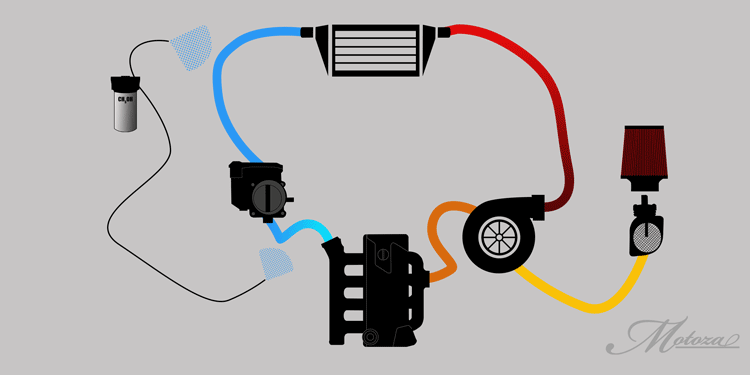
There are two primary types of installation we suggest at Motoza. Single nozzle or dual nozzle. A single nozzle at the throttle plate or one at the throttle plate and the second post intercooler. On a modest K04 1.8T, for example, we like to see around 175ccs at the throttle plate for single nozzle setups or 75ccs at the throttle plate and 125ccs post intercooler. 
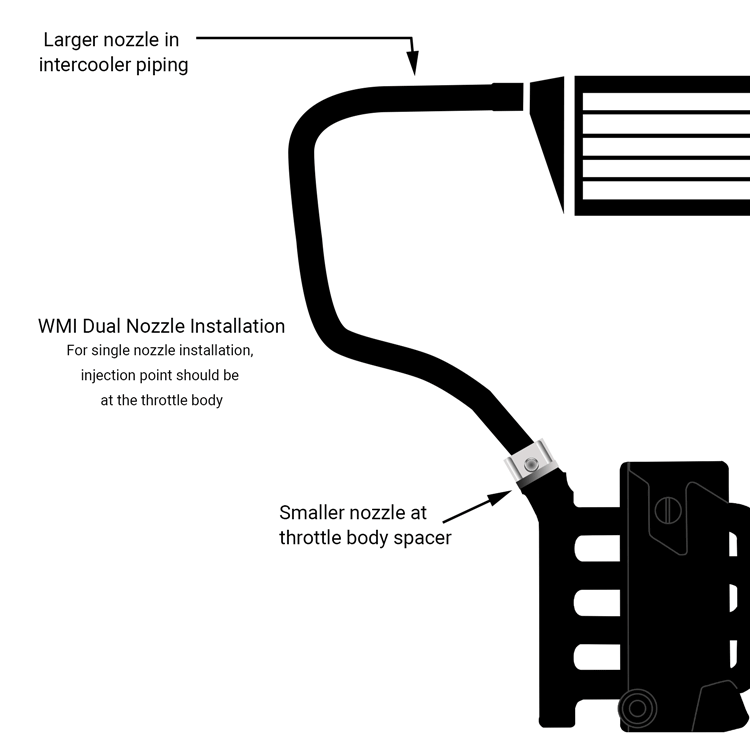
Water methanol injection points for VAG vehicles. For dual nozzle setups, place smaller nozzle at throttle body, second between throttle body and intercooler.

Boost or MAF Controlled?

Controller options vary between kit manufacturers and your budget may be the deciding factor on your controller choice. Assuming you’re not planning to invest in a controller that’s measuring everything under the hood, MAF based controllers are great for stock turbos and boost based controllers are preferred by Motoza for bigger turbos.
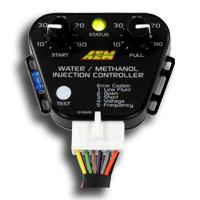
AEM Controller

Isn’t it just windshield washer fluid?

Kinda. Washer fluid is a little inconsistent when it comes to methanol content, though most are around 30% methanol. For VAG vehicles we suggest 30% methanol to 70% water on the low end up to a 50/50 water to methanol mix. While there are those who may suggest running mixtures with greater than 50% methanol, you run the risk of open flame in your engine bay, which is less than ideal in most use cases.

What about corrosion?

We won’t lie to you, it’s possible, although if you run a 50/50 mix or lower, the likelihood is decreased. Making sure you don’t have any leaks in the system will help with corrosion prevention as well. You’re running performance mods, so you’re under the hood regularly checking everything is in tip-top shape, right? 

Bottom Line

WMI is one of the most effective upgrades for turbo VAG vehicles. It offers great bang for your fueling buck. It’s pretty hard to beat a system that allows you to transform a tank of 91/93 octane gas into 100 octane race gas or better for the cost of a gallon or two of -20C washer fluid.
Motoza Performance Pre-Tuning Checklist

Whether this is your first rodeo or you’ve tuned before, getting your car running its best and keeping up with the maintenance items below will ensure you get the most out of your tune. We pride ourselves on providing a reliable tune, but that reliability requires some attention to your car. It’s a team effort.

Issues that may not be noticeable at stock levels are often amplified after tuning; some of them will prevent you from hitting full boost and getting all the horsepowers. Sure, the oil may have been changed regularly and all the recommended services may have been performed, (they have, right)? but now that you’ve decided to jump into the world of modification, your car needs a little more attention. 

Turbo & Vacuum Lines

Seriously, go over them. Little leaks can become major pains once a vehicle is tuned. If you’ve never replaced a line, there’s a good chance that there’s a leak somewhere. Ensure that all vacuum & boost lines are in good shape.

A smoke, vacuum, or pressure test is ideal, however, you can check lines while the car idles by slowly spraying them with brake cleaner or even water. If the idle rpm changes, inspect the line closely and repair/replace. The rpm will rise with brake or carb cleaner or drop with water. Please also keep in mind that leaks at check valves are sneaky and can pass a number of tests.

Now would be the perfect time to upgrade to silicone lines.

Diverter Valves

This is one pre-tuning hardware upgrade you need to think about. For 1.8Ts and 2.7Ts the Bosch 710N is an economical choice for Stage 1 and 1+. If you’re using a diaphragm type diverter valve, test to make sure it’s in good working order. If you’re tuning a 1.8T or 2.7T here’s a handy video that shows you how to test your DV: https://motozaperformance.com/testing-your-diverter-valve-1-8t-2-7t/

If you’re using a piston style diverter valve, install the heaviest spring. Most of the time this is the 25-30 lb spring. If your DV came with a 30+ lb spring that’s a tad much for lower stage cars. While we do not suggest splitter valves, if you are using one, cap off the BOV portion for tuning. Most piston style diverter valves allow the springs to be replaced rather than replacing the entire valve.

For those of you with 2.0Ts, check for tears if you’re running the diaphragm type diverter. If it’s torn and you plan to tune, we recommend upgrading to the Revision D valve, (or better), or consider upgrading to an aftermarket DV such as the Go Fast Bits DV+. https://motozaperformance.com/product/go-fast-bits-dv/

Spark Plugs

For 1.8Ts and 2.7Ts we suggest NGK BKR7EIX or NGK BKR7E if you really want to go copper. We prefer the iridium plugs due to their longevity and ability to maintain a consistent gap at high temps. Gap should be set at .028 for most applications.

For 2.0Ts go one step colder and use the NGK BKR8EIX.

Copper plugs should be replaced every oil change. Iridium plugs will run for years and offer the best blend of performance and longevity. While platinum will last even longer than iridium, the compromise to performance at the boost and temperature levels of higher output tunes means that we kinda think they are a bad idea.

N75 Valve

If you are experiencing an underboost or overboost condition, it is very likely to be exacerbated by tuning and should be resolved beforehand.

Inspect and test your N75 valve. Ensure plumbing is correct and the valve is in good working order. https://motozaperformance.com/testing-and-plumbing-your-n75-valve/

In general, the N75 is a great option for tuning, even on higher power builds as it allows for more fine boost control. You’re welcome to use a manual boost controller if you really want to, but we recommend keeping the N75 in most tuning situations.

Intercooler

Clean that puppy! Stock or upgraded, make sure you don’t have leaves or debris blocking your intercooler and wreaking havoc on your IAT’s. Make sure all the plumbing is in good shape and your hose clamps are tight while you’re in there.

MAF Sensor/Housing

Clean your MAF sensor, (a quick shot of MAF cleaner or electrical contact cleaner works wonders), and make sure it’s properly seated. Check the wiring for any signs of brittleness or breakage. (This check the wiring thing is going to be a trend).

Please also confirm your MAF housing size prior to tuning. If you’re a 2.7T owner, confirm Hitachi vs. Bosch.

If you run an oiled air filter, regular MAF cleaning is a must as they tend to get gunk on the sensor. Switching to a non-oiled filter is a good idea.

Coils & Misfires

Are your coils tired? Bench testing is the ideal way to check your coils and a good excuse to buy a multimeter if you don’t already have one. If you’re prepping your 1.8 and want to upgrade to 2.0T coils, go for it. We don’t have a strong preference, but let us know if you’ve converted when you complete your hardware sheet. While you’re there, check the coil wiring and harness. Look for any signs of corrosion or brittleness and address it.

If you’re seeing misfire codes, please check your coils and spark plugs. Vacuum leaks may also cause misfires in addition to robbing you of boost and messing with fueling! If you’ve checked everything and you still see enough misfires to throw codes, it may be time to enlist the help of your friendly, local Audi/VW mechanic.

CELs & Codes

Got a bunch of pesky lights on your dash? Read codes ahead of tuning and make the proper repairs. We cannot simply “code out” actual mechanical issues. Boost leaks are real. So are oil pressure codes. Feel free to let us know what codes you’re seeing and we can let you know if any will be tuning related.

Pro Tip: Even if you don’t have VCDS/VAG-Com, the Ross Tech wiki is a fantastic place to look up codes. Google is fine, but Ross Tech has solid, VAG specific code info. 

Battery

We suggest you begin the remote tuning process with a healthy battery. A Battery Tender or trickle charger that puts out 1-3 amps is STRONGLY recommended during flashing. ECUs can crash if your battery voltage drops while flashing. In the unlikely event this happens, the ECU may need to be sent to us. 

Timing

Some say it’s everything. Is your timing belt service up to date? No, really, this is big. If you’re 20,000 miles past the recommended timing belt replacement date, go deal with it. If you’re 5 miles overdue, go deal with it.
Engine failure takes the fun out of everything.

Overall Vehicle Condition

We encourage you to check all of your vehicle’s systems prior to tuning. This includes but is not limited to compression, brakes, clutch/transmission, tires, alignment, and fluids. But of course you’re already on top of that.

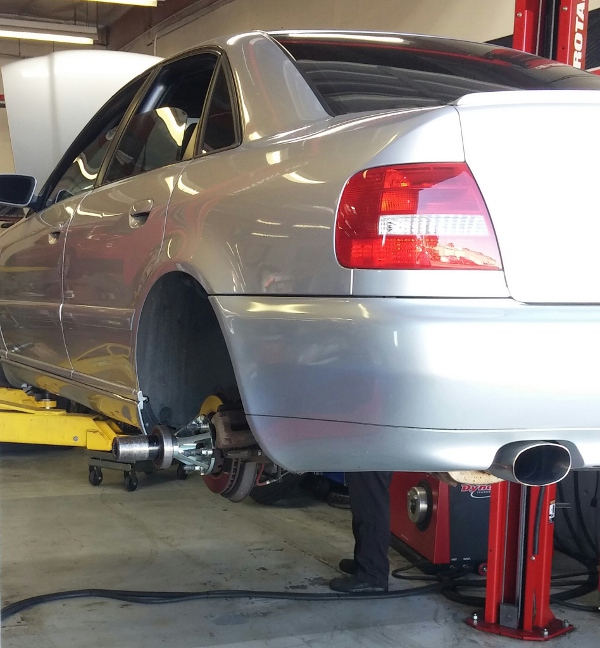
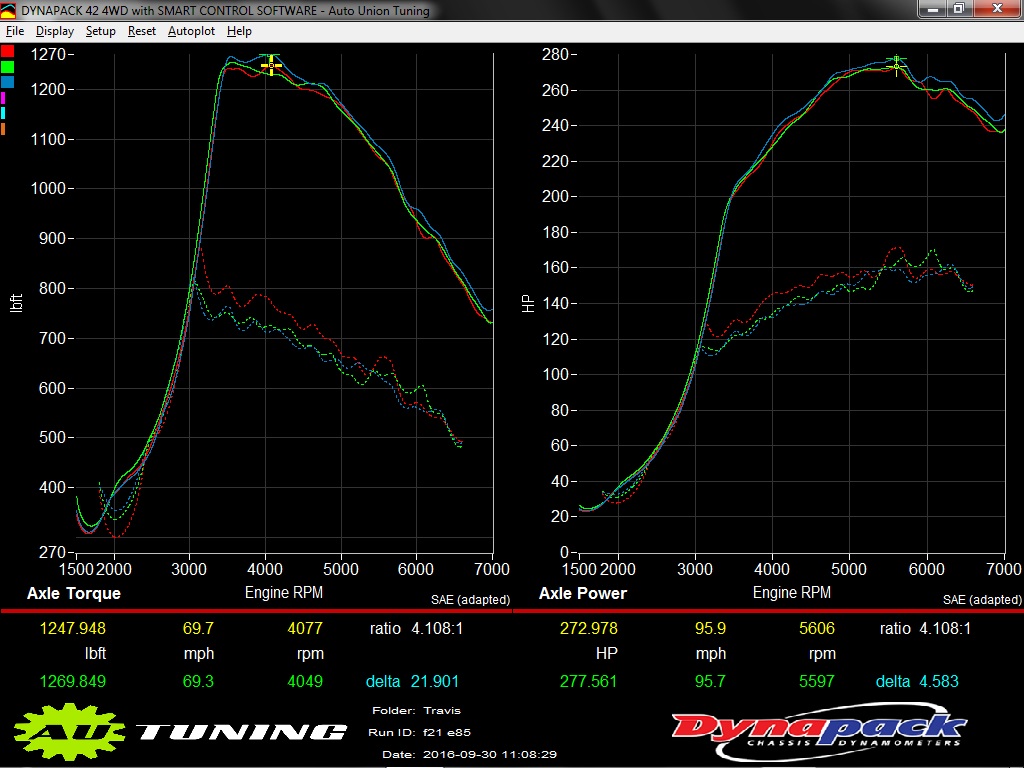
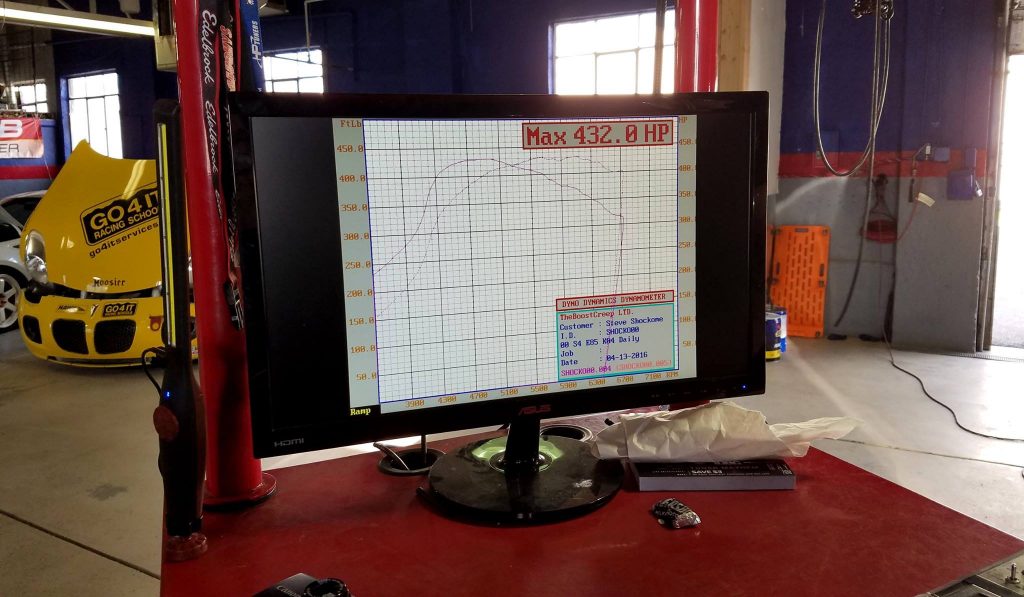
Travis C’s 2001 B5 A4 Dyno Results

Travis sharing his Dyno results! Testing done at AU Tuning – ambient air temp was at about 82 degrees.

2001 Audi A4 Quattro B5 AWM 1.8T

309 AWTQ 278 AWHP

Relevant mods at time of dyno:

  • 2001 A4 1.8TQM, 126k miles and stock engine (except upgraded rods)
  • FrankenTurbo F21 kit (non-mixed flow, purchased June 2014)
  • Motoza tuned with switchable maps, running E85 currently
  • Bosch EV14 750cc injectors, seeing ~75% max IDC. Stock 4bar FPR.
  • DeatschWerks DW200 fuel pump
  • Engine has I.E. connecting rods, and tune accommodates them
  • 3″ MAF housing
  • 3bar MAP sensor
  • Treadstone TR18T FMIC, 2.5″ cold-side and 2″ hot-side piping
  • 034 3″ HFC
  • 2.5″ custom cat-back exhaust with Magnaflow mufflers
  • B7 RS4 clutch kit with ECS Tuning RA4 flywheel
  • The car’s tune is conservative enough that it doesn’t see more than 1.5 degrees of knock on any cylinder at WOT
  • Car hits 25psi, but tapers to prevent MAF readings from going much above 240 g/s to improve turbo life

Testing Your Diverter Valve – 1.8T & 2.7T

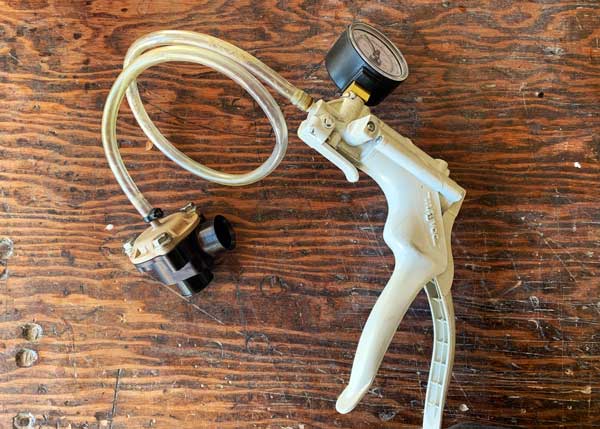
Diverter valve attached to vacuum pump for testing, Audi, Volkswagen, VW, VAG, tuning

A quality diverter valve is a key component for a tuned VAG engine. The diverter valve allows the turbo to keep spinning while letting off excess air. Unlike a blow off valve, it vents back to the intake stream rather than venting to the atmosphere. The MAF sensor then meters this air and the ECU make a number of calculations based on this data. Since a tuned vehicle makes more boost, you need an upgraded valve that can handle the pressure.

Types of Diverter Valves

There are two primary types of diverter valves: diaphragm and piston. The diaphragm style uses rubber or other flexible material to seal off airflow, while a piston style valve accomplishes the same with the use of a piston. Most piston style valves are adjustable via spring tension or rebuildable. Because they are under a great deal of pressure, the diverter valve is a great place to start if you’re having performance issues.

How Do I Check It?

If you have a diaphragm style DV,  a screwdriver handle or a Sharpie and your hands will tell you what you need to know.

  • Remove the diverter valve.
  • Insert the screwdriver handle or pen into the bottom of the DV to open it.
  • Cover the top of the diverter valve with your finger.
  • Remove the screwdriver or pen, then remove your finger.
  • If you hear a pop if your DV is probably ok.

More reliably and universally you can test either a piston style or diaphragm style DV with a vacuum pump such as the Mityvac MV8500.

  • Attach vacuum tubing to the diverter valve inlet and the vacuum pump.
  • Note how much vacuum the valve holds. A bad valve will not hold any vacuum.

Here’s how to test with a marker or screwdriver handle:

Testing your DV with a vacuum pump:

Most manufacturers of piston style valves offer rebuild kits. We suggest installing the heaviest spring. Alternately, some models allow you to tighten the valve by hand, again, we suggest tightening all the way down. The Bosch 710N is a cost effective diaphragm style diverter valve for Stage 1 and Stage 1+ projects.

Testing and Plumbing Your N75 Valve

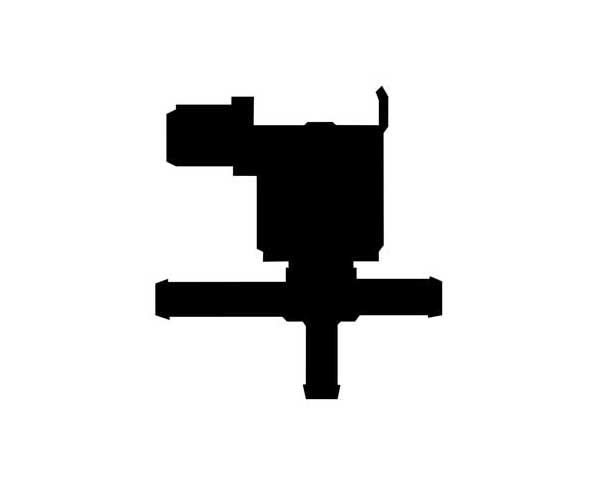
Outline of VAG N75 for 1.8T engines, Audi, Volkswagen, VW, VAG, tuning

The N75 valve is responsible for controlling boost in your turbocharged VAG vehicle. It is designed to regulate boost comfortably and smoothly and will carry you though most tuning stages. If you’re experiencing boost issues, we may ask you to verify the plumbing or test for proper function.

Plumbing

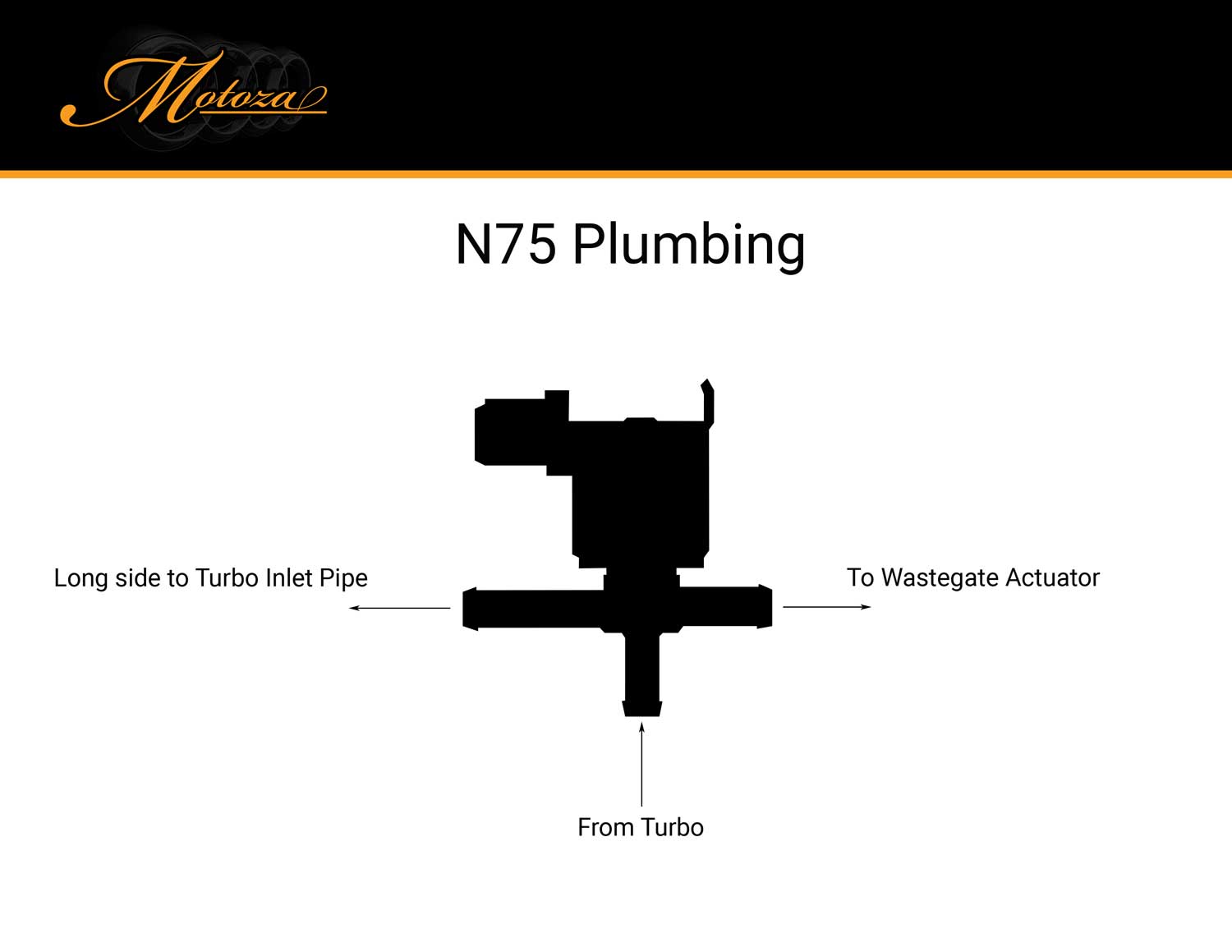
The lower portion of the N75 valve is shaped like a lopsided ‘T’. The long stem on the side connects to your turbo inlet pipe. The opposite, shorter stem connects to the wastegate actuator. The bottom stem leads from the turbo as shown below.

Air from the turbo enters the N75 valve from the bottom stem. When inactive, this charge pressure vents through the wastegate. When activated, part or all of that pressure raises boost in the turbo.

Is Your Valve Functioning?

Now you’ve addressed proper plumbing; ensure proper function. If you have VCDS,  perform an N75 output test. For those without access to VCDS, another method of testing can be used prior to installation.

  • Unplug and remove the valve.
  • Blow into the bottom stem, or use an air source.
  • If air is escaping out of the long turbo inlet pipe stem, your valve has failed.

Test Your Wastegate Cracking Pressure

K04 Turbo, Big Turbo, wastegate, Audi, Volkswagen, VW, VAG, tuning

How to Test Your Wastegate Cracking Pressure

Over the course of tuning, issues that weren’t noticeable with stock boost and power levels may become annoyingly obvious. Boost flutter, boost levels lower than expected, or a drastic loss in fuel economy can all be signs of a wastegate issue. In order to properly diagnose the cause of your vehicle’s symptoms, we may ask you to check the wastegate cracking pressure. Metered air is the most accurate way to go. Using a regulated air compressor or a Mityvac*, you can determine the cracking pressure and adjust from there.

  • Connect tubing to metered air source and the wastegate actuator nipple.
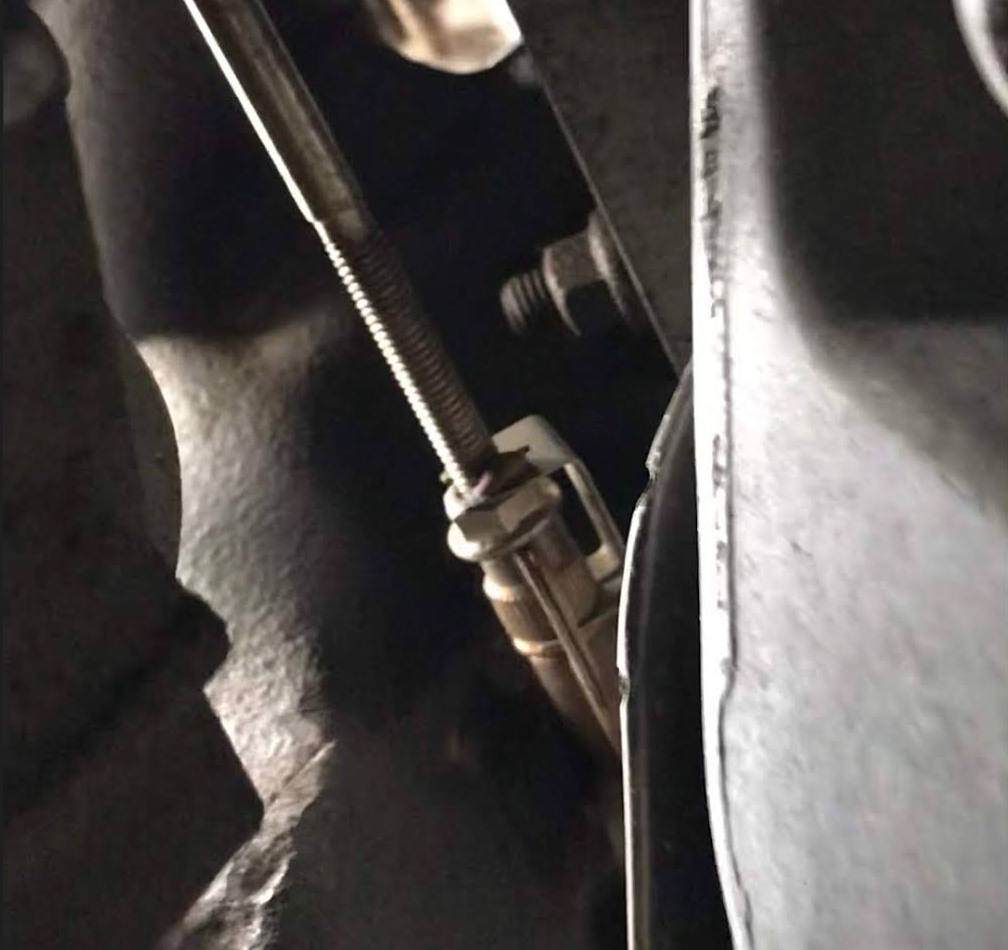
  • Slowly apply pressure while watching the actuator arm for movement.
  • Note the pressure required to move the actuator, this is your cracking pressure.

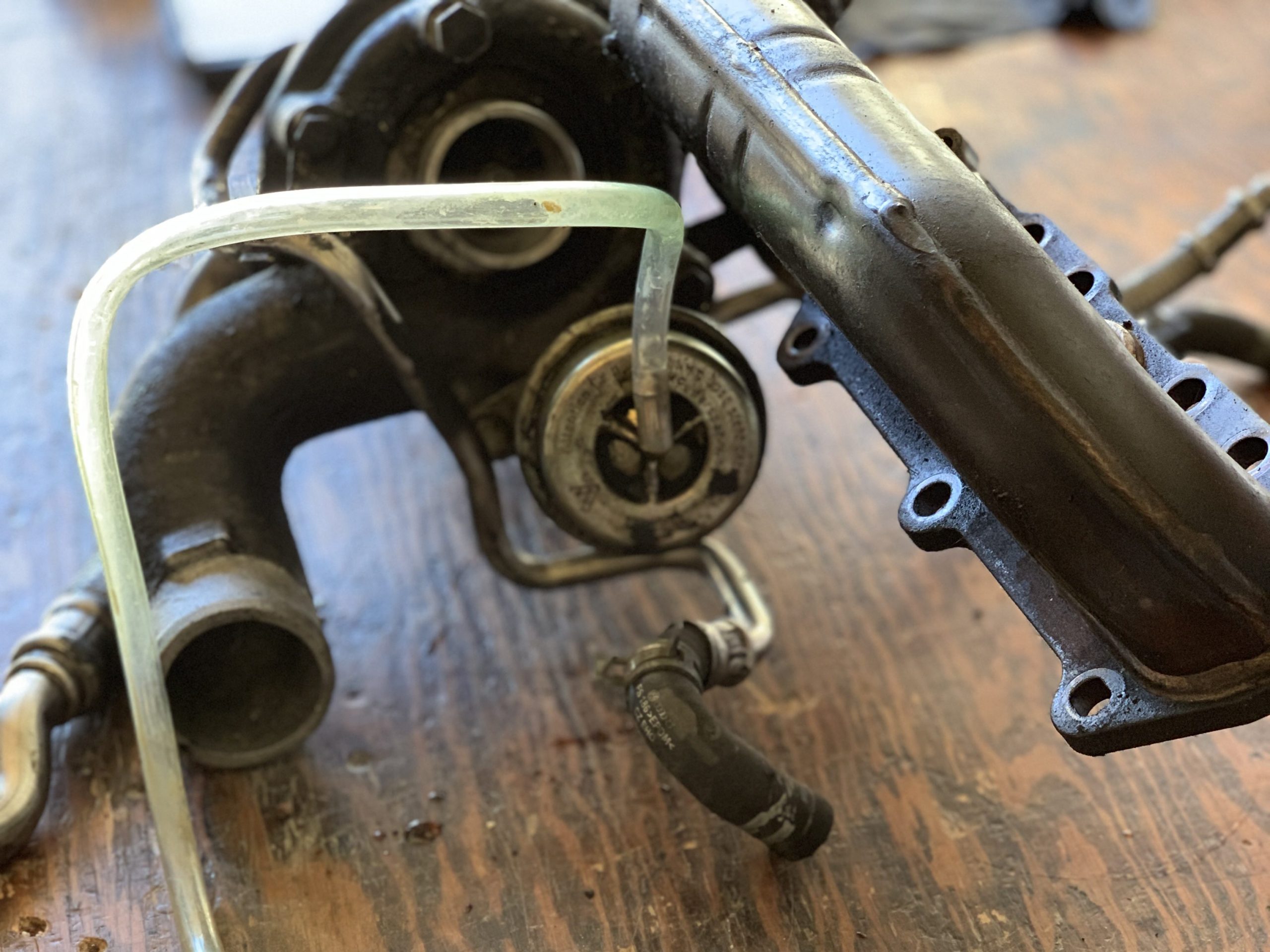
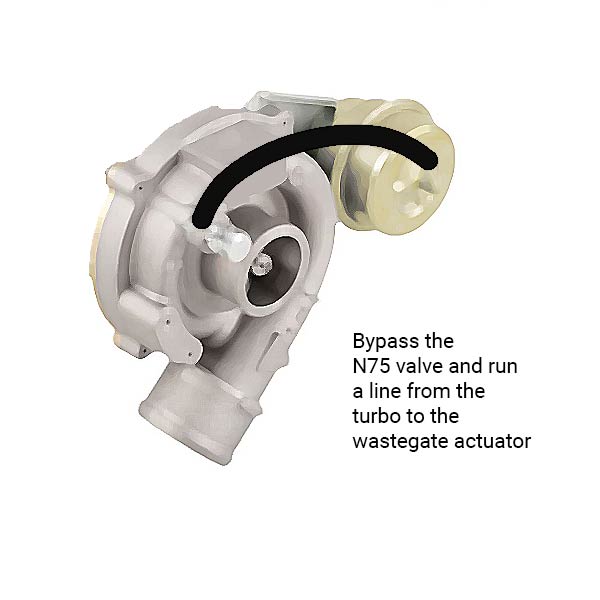
If you have a boost gauge installed, you can bypass the N75 valve to test the cracking pressure. If you need more information on N75 plumbing, click here.

Simply run a line from the turbo to the wastegate actuator, bypassing the N75 valve completely. With the N75 bypassed and the wastegate connected directly the waste gate will open as soon as the turbo generates enough pressure to overcome the waste gate cracking pressure. Simply drive the car and the maximum boost indicated on your boost gauge or by our data logger is the wastegate cracking pressure.

Bypassing the N75 to check wastegate pressure.

*Mityvac is not connected with Motoza Performance in any way. The MV8500 is the current model that tests both vacuum and pressure. It is similar to the older model used in this video.

How to Adjust the Wastegate on your 2.0T VAG Vehicle

Wastegate Adjustment, Audi, Volkswagen, VW, VAG, tuning

Disappearing Boost?

If you’re losing boost or not building boost on your 2.0T Audi or VW rule out the usual suspects such as boost leaks or a failed diverter valve. If your lines and DV check out, it may be time to adjust your wastegate. Fortunately, it’s fairly easy on a stock turbo. Click below for the PDF.

How to Adjust your 2.0T Wastegate
2.0T Wastegate Adjustment

Should You Go MAF-Less?

Should You Go MAF-Less?

The Motoza tune is built for you and we pride ourselves on accommodating the most customized of builds. While you can certainly run a MAF-less setup, there are some real advantages to including a MAF in your build when it comes to VAG cars.

Why is a MAF important?


The MAF, (Mass Airflow Sensor), is the primary fueling input for the ECUs in Volkswagens and Audis.  Motronic built ECUs largely around the concept of engine load. The MAF reading is at the heart of many of the advanced features in these ECU’s. The information the MAF provides the ECU allows it to adjust fuel delivery based on actual conditions. This ensures better performance in different weather conditions and with certain hardware changes.  The ECU uses the MAF reading to help coordinate efforts with traction control, ABS, and driver inputs such as throttle. A reliable MAF reading also enhances a number of diagnostic features. This allows the ECU to detect irregular conditions above or below an acceptable range.

As power goals increase, the metering requirements for a MAF are increased substantially. Thus, the stock MAF setup in many cars becomes inadequate.  Luckily, VAG has resolved this issue across their own model ranges by using a modular system of MAF housings and sensors.  This allows the sensor to be fit into a larger factory housing capable of metering more air, and with the correct software calibration, a reliable MAF reading and all the enhancements that go with it can be preserved.

But I’m running out of space in the engine bay!

For moderate big turbo builds there are great solutions available. Motoza offers support for several draw-through MAF setups in a wide range of diameters. However, fitting a large enough MAF housing can become an issue due to limited space in the engine bay, not to mention complications with large compressor inlets and the associated plumbing.  The diverter valve is also a component that can become difficult to support in high power builds. Which means there is a strong temptation to eliminate either the MAF, the DV, or both.

If you’re thinking of going MAFless for a very high power build due to space, consider a blow through MAF setup.  Blow through setups place the MAF sensor in the cold side charge piping between the intercooler and the throttle body.  This completely eliminates the packaging requirements for a large MAF housing, large turbo inlet pipe, and even the extra plumbing and fittings associated with the DV.

With a proper blow-through MAF setup it is possible to meter an incredible amount of air in a very small space.  This achieves the best of both worlds, accommodating extreme power levels without additional space requirements, and maintaining the full functionality of your engine management system.

The Bottom Line


You stand to gain by keeping a MAF. It is our recommendation to resist the temptation of a MAF-less setup.  When it comes to BT builds on Audi and VW vehicles, there are so many enhancements possible with a MAF that it really is worth finding a way to fit one.

Kevin’s K04-015 Killin’ It

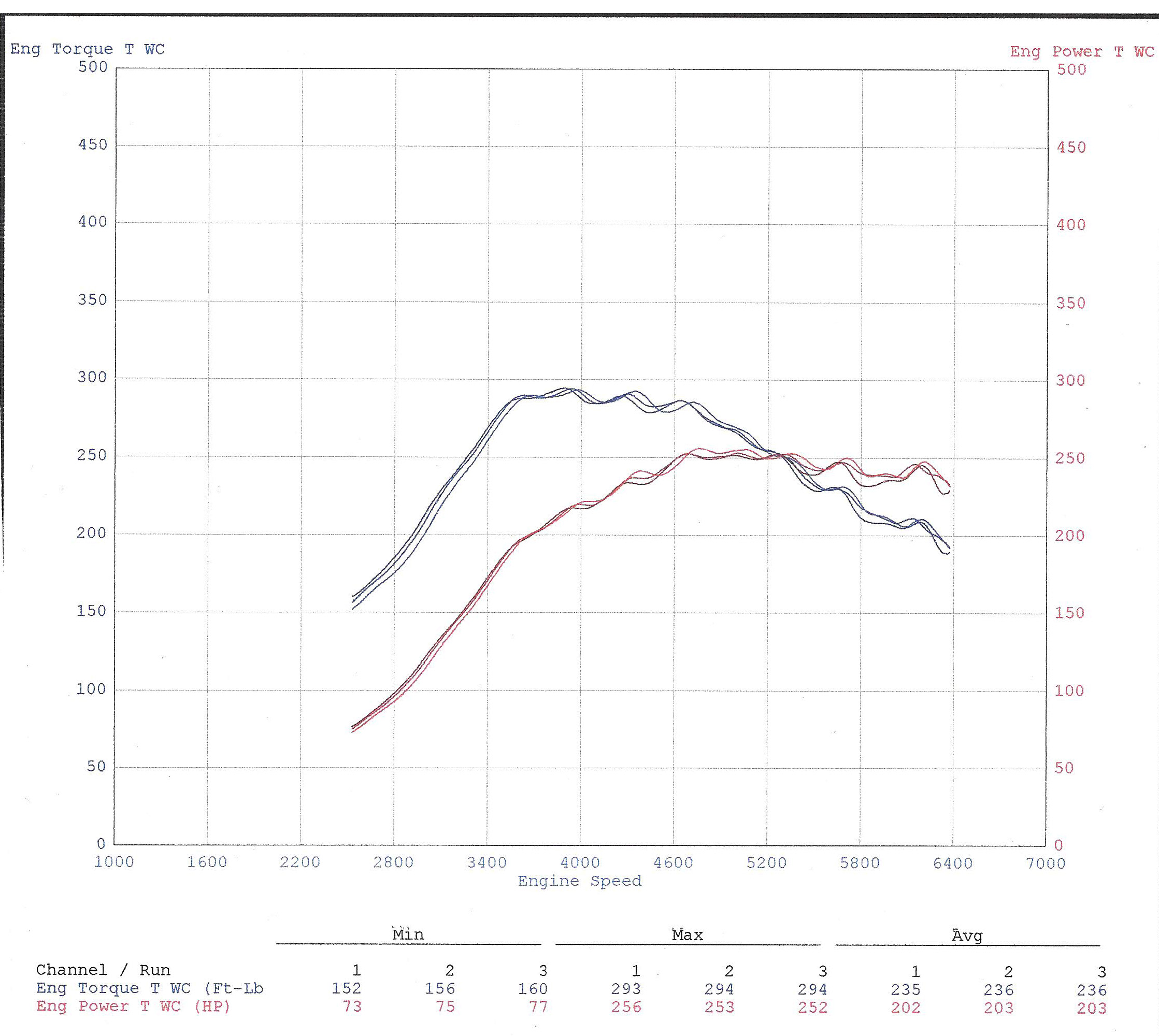
Kevin's Dyno Graph

This may be the most powerful K04-015 we’ve ever done! 293 AWTQ and 256 AWHP on a 02 B6 A4 Quattro

Kevin has been awesome to work with. We’ve been helping him with his standard K04-015 running e85 with MTC, a front mount intercooler, stock MAF housing/sensor. He’s also running an APR 3 inch turbo inlet pipe, an APR Carbonio intake, and an OEM 710 diverter valve with the EV14-550cc Injectors.