Travis C’s 2001 B5 A4 Dyno Results

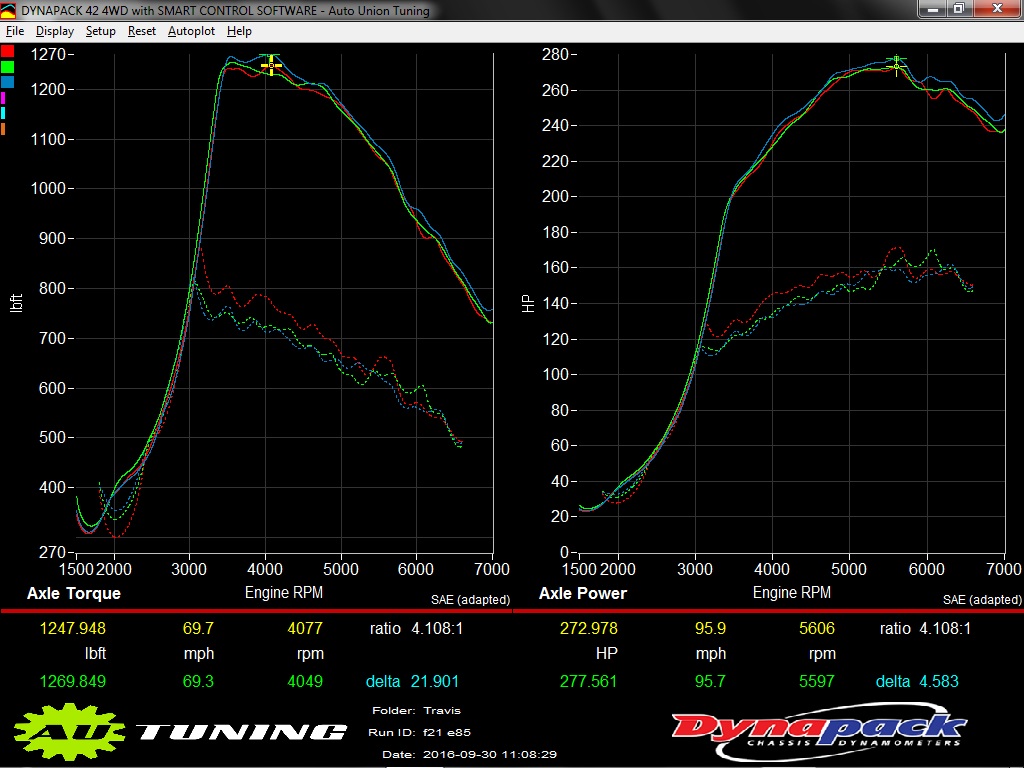
Travis sharing his Dyno results! Testing done at AU Tuning – ambient air temp was at about 82 degrees.

2001 Audi A4 Quattro B5 AWM 1.8T

309 AWTQ 278 AWHP

Relevant mods at time of dyno:

  • 2001 A4 1.8TQM, 126k miles and stock engine (except upgraded rods)
  • FrankenTurbo F21 kit (non-mixed flow, purchased June 2014)
  • Motoza tuned with switchable maps, running E85 currently
  • Bosch EV14 750cc injectors, seeing ~75% max IDC. Stock 4bar FPR.
  • DeatschWerks DW200 fuel pump
  • Engine has I.E. connecting rods, and tune accommodates them
  • 3″ MAF housing
  • 3bar MAP sensor
  • Treadstone TR18T FMIC, 2.5″ cold-side and 2″ hot-side piping
  • 034 3″ HFC
  • 2.5″ custom cat-back exhaust with Magnaflow mufflers
  • B7 RS4 clutch kit with ECS Tuning RA4 flywheel
  • The car’s tune is conservative enough that it doesn’t see more than 1.5 degrees of knock on any cylinder at WOT
  • Car hits 25psi, but tapers to prevent MAF readings from going much above 240 g/s to improve turbo life

Testing Your Diverter Valve – 1.8T & 2.7T

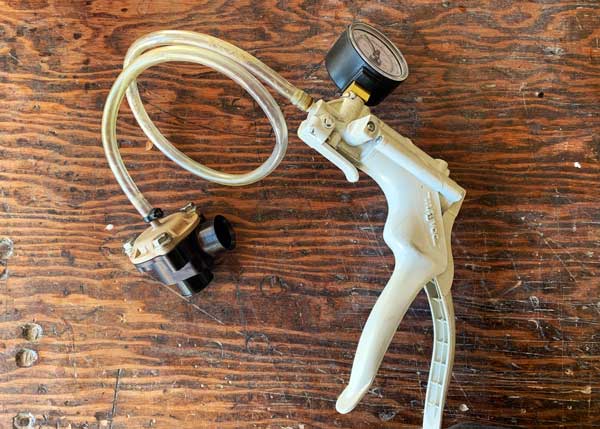
Diverter valve attached to vacuum pump for testing, Audi, Volkswagen, VW, VAG, tuning

A quality diverter valve is a key component for a tuned VAG engine. The diverter valve allows the turbo to keep spinning while letting off excess air. Unlike a blow off valve, it vents back to the intake stream rather than venting to the atmosphere. The MAF sensor then meters this air and the ECU make a number of calculations based on this data. Since a tuned vehicle makes more boost, you need an upgraded valve that can handle the pressure.

Types of Diverter Valves

There are two primary types of diverter valves: diaphragm and piston. The diaphragm style uses rubber or other flexible material to seal off airflow, while a piston style valve accomplishes the same with the use of a piston. Most piston style valves are adjustable via spring tension or rebuildable. Because they are under a great deal of pressure, the diverter valve is a great place to start if you’re having performance issues.

How Do I Check It?

If you have a diaphragm style DV,  a screwdriver handle or a Sharpie and your hands will tell you what you need to know.

  • Remove the diverter valve.
  • Insert the screwdriver handle or pen into the bottom of the DV to open it.
  • Cover the top of the diverter valve with your finger.
  • Remove the screwdriver or pen, then remove your finger.
  • If you hear a pop if your DV is probably ok.

More reliably and universally you can test either a piston style or diaphragm style DV with a vacuum pump such as the Mityvac MV8500.

  • Attach vacuum tubing to the diverter valve inlet and the vacuum pump.
  • Note how much vacuum the valve holds. A bad valve will not hold any vacuum.

Here’s how to test with a marker or screwdriver handle:

Testing your DV with a vacuum pump:

Most manufacturers of piston style valves offer rebuild kits. We suggest installing the heaviest spring. Alternately, some models allow you to tighten the valve by hand, again, we suggest tightening all the way down. The Bosch 710N is a cost effective diaphragm style diverter valve for Stage 1 and Stage 1+ projects.

Testing and Plumbing Your N75 Valve

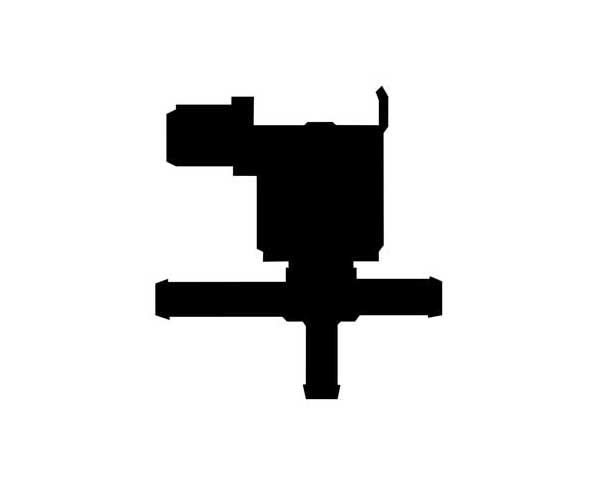
Outline of VAG N75 for 1.8T engines, Audi, Volkswagen, VW, VAG, tuning

The N75 valve is responsible for controlling boost in your turbocharged VAG vehicle. It is designed to regulate boost comfortably and smoothly and will carry you though most tuning stages. If you’re experiencing boost issues, we may ask you to verify the plumbing or test for proper function.

Plumbing

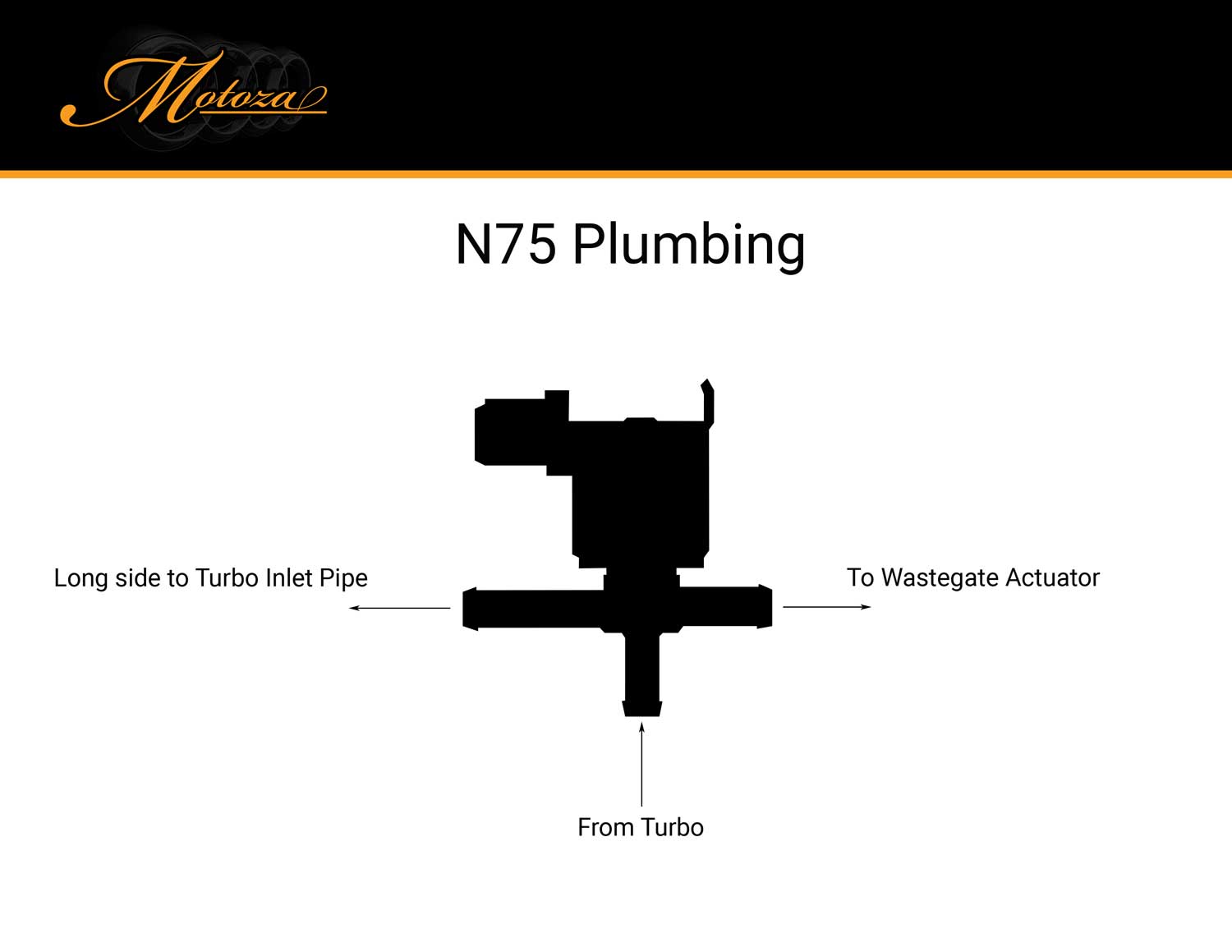
The lower portion of the N75 valve is shaped like a lopsided ‘T’. The long stem on the side connects to your turbo inlet pipe. The opposite, shorter stem connects to the wastegate actuator. The bottom stem leads from the turbo as shown below.

Air from the turbo enters the N75 valve from the bottom stem. When inactive, this charge pressure vents through the wastegate. When activated, part or all of that pressure raises boost in the turbo.

Is Your Valve Functioning?

Now you’ve addressed proper plumbing; ensure proper function. If you have VCDS,  perform an N75 output test. For those without access to VCDS, another method of testing can be used prior to installation.

  • Unplug and remove the valve.
  • Blow into the bottom stem, or use an air source.
  • If air is escaping out of the long turbo inlet pipe stem, your valve has failed.